The Never-ending Debate of “Is ______ Jazz?”
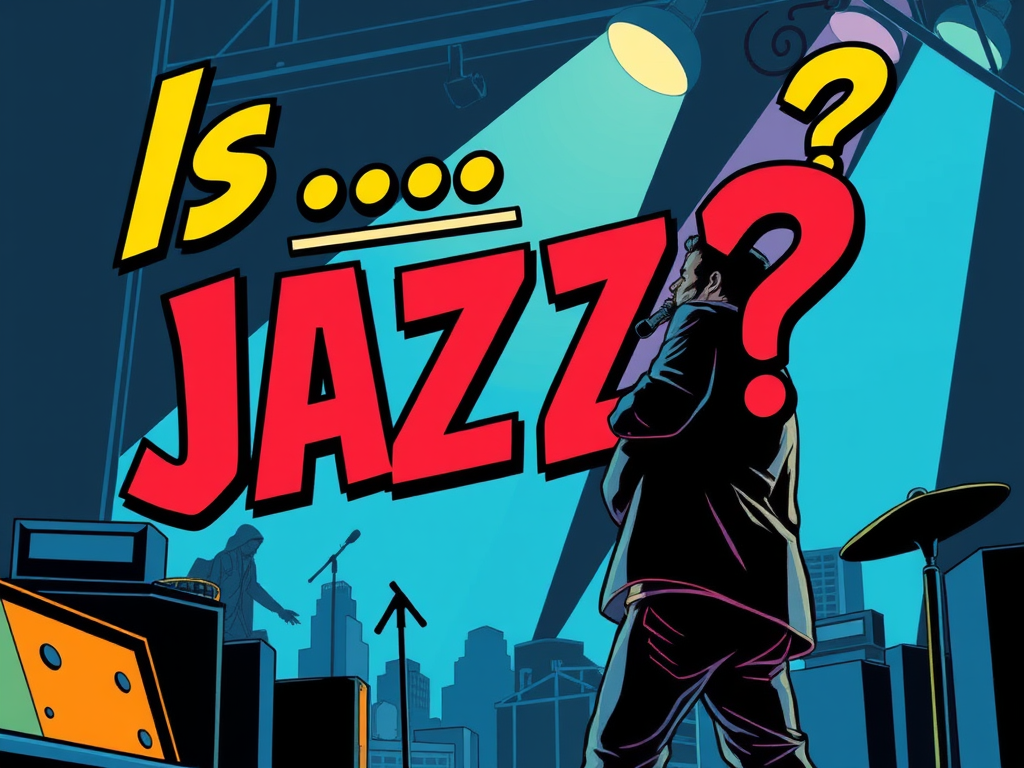
- 文│賴曉俐 / By Hsiao-li LAI (以英文撰寫於2024年6月,中文版翻譯於同年12月)
Every once in a while, a debate about “Is ______ Jazz?” would surface and create heated discussions about Jazz canon and identity. This author, being an avid listener of Jazz since the mid-1990s, has borne witness to more than a few. These debates often started with disagreements over a claimed (or self-claimed) Jazz musician and sometimes escalated into conflict between general public and the Jazz community. A recent case would be the “Is Laufey jazz?”[1] debate on social media that happened between Laufey fans and veteran Jazz musicians / afficionados.
每隔一段時間,就會有場關於「______是爵士樂嗎?」的爭論浮上檯面,並引發對爵士樂法則及身份的激烈討論。筆者自 1990 年代中期就是一位爵士樂的熱衷聽眾,如此爭論見證了不只一次。這些爭論通常起因於對某位爵士樂手 (或自稱為爵士樂手) 的分歧意見,有時更會升級為一般大眾與爵士樂社群之間的衝突。最近的一個例子是「Laufey是爵士樂嗎?」的爭論,發生於 Laufey 的粉絲與資深爵士樂手/愛好者之間。
To understand the nature of such debates, one can ask two questions: what causes the debate? and who are debating? The answer to the first question, this author posits, lies in the polymorphic nature of the Jazz sound and the misalignment that occurs when listeners of various backgrounds, listening experiences and degrees of involvement with Jazz try to identify it. As for the second question, the answer to “to whom does the debate matter” also contributes crucial insight into the subject.
要了解這種爭論的本質,可以從兩個問題切入:是什麼引起爭論?誰在爭論?筆者認為,第一個問題的答案在於爵士樂聲音的多樣性,以及不同背景、聆聽經驗和爵士樂參與程度的聽眾在嘗試辨別爵士樂聲音時所產生的判斷誤差。至於第二個問題,可由「如此爭論對誰重要」的答案窺知。
In this essay, discussions of what Jazz music “sounds” like, who has the right of discourse and how life is as a member of the Jazz community are included to provide further understanding of this never-ending debate of “Is ______ Jazz?”
在這篇文章中,我將討論爵士樂的「聲音」是什麼、誰擁有話語權,以及爵士樂社群的成員們過著怎樣的生活,從而進一步瞭解「______是爵士樂嗎?」這個永無止境的爭論。
The Debate 爭論
At the time of writing this essay, the initial Laufey debate which took place in the Fall of 2023 has subsided. However, questioned during the time of her 2023 Taipei concert[2] by local musicians for her identity as a Jazz musician, Laufey is once again introduced as not only the “Jazz singer from Iceland” but “Norah Jones of Gen Z” for her 2024 sold-out Taipei concert,[3] which has invited another round of heated exchanges.
在撰寫這篇文章時,最初在2023年秋天發生的Laufey爭論已經平息,然而,即便在2023年台北演唱會舉行期間被當地音樂人質疑她的爵士樂手身份,Laufey在她已完售的2024年台北演唱會,再次以「來自冰島的爵士歌手」以及「Z世代的諾拉·瓊斯」身份亮相,引發新一輪的激烈討論。
Interestingly enough, Norah Jones was once the center of the same controversy back in the 2000’s when her debut album Come Away With Me was released. Suffice it to say, the Laufey incident has once again tread on the Jazz community’s collective toes and this altercation can be traced further back to the late 80’s about the Smooth Jazz artist that every Jazzer loves to hate, Kenny G, and his Duotones album. Meanwhile, on the other side of the planet, Taiwan is no stranger to such arguments and one of the most notable controversies happened in 2014, thanks to the media exposure, when the song ‘Body’ by Elephant Gym, a local math rock band, was shortlisted for the Golden Indie Music Award.
有趣的是,諾拉·瓊斯在 2000 年代發行首張專輯《遠走高飛》時,也曾經成為同樣爭論的焦點。可以這麼說,Laufey 事件再一次觸動了爵士樂社群的集體怒火,而這場爭論可以追溯到 80 年代後期,關於那位讓每位爵士樂手都樂於厭惡的柔和爵士樂手肯尼·吉,和他的《雙聲調》專輯。與此同時,在地球的另一端,臺灣對於這樣的爭論也不陌生,其中最知名的爭論發生在 2014 年—感謝媒體的推波助瀾,當數字搖滾樂團大象體操的歌曲〈身體Body〉入圍了金音獎最佳爵士類型單曲獎時。
The obvious question here is not only why identifying the aforementioned artists or musical works as “Jazz” becomes a subject of dispute, but also why their works are considered “Jazz” while they sound stylistically worlds apart with Laufey favoring Bossa Nova and mid-century Pop, Norah Jones leaning toward folk and country music, not to mention that Kenny G’s sensual approach is in great contrast to Elephant Gym’s experimental rock sound. In the meantime, another equally important question should be brought to our attention: why can a musician or a musical piece “sound like” but “not” Jazz? This might also shed some light on the cause of this never-ending debate, a supposed mis-categorization.
顯而易見的問題不只是為什麼上述音樂家或音樂作品被認定為「爵士樂」一事會成為爭議,另外還包括了為什麼這些在風格上有天壤之別的作品,都會被認知為「爵士樂」,比如Laufey作品風格偏向Bossa Nova和20世紀中期的流行樂、諾拉·瓊斯則傾向於民謠和鄉村音樂,更別提肯尼·吉的感性風格與大象體操的實驗搖滾風格形成強烈對比。與此同時,另一個同樣重要的問題也應該引起我們的注意:為什麼一位音樂家或一首音樂作品可以「聽起來像」爵士樂,卻「不是」爵士樂?這也許可以讓我們了解這場永無止境的爭論的起因—所謂的錯誤分類。
So why do people argue? The cause is multifaceted and one of the main culprits is the sound of Jazz that seems to be in constant state of shapeshifting since its birth. Another culprit is the practice of Jazz that is revealed only to the trained ears. The third culprit would be the Jazz canon that is different between members of the Jazz community of different practices and/or from different regions.
那麼為什麼人們會爭論?起因有很多層次,其一個是爵士樂的聲音,似乎自它誕生以來就不斷在變形;其二是爵士樂的實踐,只有經過訓練的耳朵才得以分辨;其三是爵士樂的法則,使用不同的實踐方法或來自不同地區的爵士樂社群成員,對法則有不同的想像。
The Sound 聲音
How does the sound of Jazz shapeshift? If we skim through the ‘Jazz’ entry from the Grove Music Online (or any reputable music textbooks and anthologies) and listen to their recommended music tracks, we will find an inconsistency of what Jazz music sounds like in a time span of 130 years.
爵士樂的聲音是如何變形的?如果我們快速瀏覽過牛津葛洛夫線上音樂辭典 (或任何知名的音樂教科書和選集) 中的「爵士樂」條目,聽聽它們推薦的音樂曲目,我們會發現在130年的時間跨度中,爵士樂的聲音並不一致。
The instrumentation evolves from small ensemble of wind, brass and rhythm section of the New Orlean Jazz at the end of 19th century through the Jazz Age of the 1920s to the big bands of the Swing Era in 1930s, then back to smaller format during Bebop period in the 1940s, then augmented again when Gil Evans introduced orchestral instruments such as French horn, tuba, flutes and harp to create softer hues and consequently a larger pallet of sonic color. On top of that, the glocalization that follows the diaspora of Jazz music has expanded the choice of instrumentation further when Jazz musicians around the world adapt the local elements into their music-making.
由器樂編制的發展觀之,19世紀末紐奧良爵士的木、銅管加上節奏組的小型編制沿用至二十世紀20年代的爵士樂時代,在30年代擴編為搖擺樂大樂團,在40年代Bebop時期又回到小型編制,隨後在吉爾·埃文斯引進如法國號、低音號、長笛與豎琴等交響樂團常見的樂器後,編制再度擴增,創造出更柔和的色調,進而產出更豐富的音色變化。除此之外,伴隨爵士樂的離散 (diaspora) 還出現了全球在地化 (glocalization) 現象,世界各地的爵士樂手將當地元素融入自己的音樂實踐,進一步擴大了器樂編制的選擇。
In terms of performing style and technique, which is a topic that deserves multiple theses and decades of research, one only needs to observe the rhythmic features of works from various period of Jazz music, for example how Louis Armstrong place the accented notes in his solo passages, the dramatic laidback and anticipation of the Duke Ellington Orchestra, the Charlie Parker bebop tunes where all the 8th notes were played evenly due to their raging tempo, the radical freedom of Cecil Taylor when the sense of pulse often dissolves, the use of odd meter or polyrhythm by the Yellowjackets or the Pat Metheny Group…etc., to realize that Jazz musicians don’t even “swing their 8th-notes” the same way.
就演奏風格和技巧而言,這是一個值得多篇論文和數十載研究的課題,但我們只需要觀察一件事—不同時期爵士樂的節奏特徵,比如路易·阿姆斯壯在他的獨奏段落中如何放置重音、艾靈頓公爵大樂團充滿戲劇性的延遲與搶拍、查理·帕克的八分音符都因曲目狂飆般的速度設定而被平均等值地吹奏、塞西爾·泰勒激烈的自由爵士演奏常讓音樂的脈動感消解、黃蜂樂團或派特·麥席尼樂團使用奇數拍子或複節奏…等,就可發現爵士樂手們甚至連「如何搖擺他們的八分音符」的方式都不一樣。
The shapeshifting nature of Jazz music unavoidably creates confusion when audience tries to pinpoint the “Jazz sound” had they not made the effort to educate themselves with the hundred-year-long evolution of Jazz. Then there is the practice of Jazz through improvisation and reinterpretation over the original material which is highly individualized and would be addressed here as the treatment.
對於未熟稔爵士樂百年風格演變的聽眾來說,當他們嘗試準確指出什麼是「爵士樂的聲音」時,難免會被前述的變形特質所混淆。此外,爵士樂的實踐是透過即興及對原始素材的重新詮釋而來,這樣的實踐是高度個人化的,筆者在此將之稱為「處理」。
This treatment can be best demonstrated with the Jazz Standards where musicians are expected to follow a set of harmonic progression through the head-solo-head form and contribute their own treatment over said Standard, usually popular songs or Broadway show tunes from the first half of the 20th century, at the solo section. However, the individualism residing within each solo section is not easily perceived upon first hearing to the untrained ears, which is another culprit that causes the never-ending debate.
由爵士標準曲目的演奏中,可以很好地理解何謂「處理」:在「主題旋律–獨奏–主題旋律」的曲式中,樂手們遵循一套既定的和聲行進,在獨奏片段以自己的方式來處理主題旋律—通常是來自20世紀上半葉的流行歌或百老匯歌曲。然而,未經訓練的耳朵在初次聆聽時,並不容易認知到樂手們在獨奏片段所展現出的個人手法,這也是造成這永無止境爭論的原因之一。
The Trained Ears 經過訓練的耳朵
Safe to say that listeners with different degrees of involvement in Jazz music answer the “Is ______ Jazz?” question differently. When the general public identifies Jazz with WHAT they hear, people with the “trained ears” for Jazz music put more values on WHO is playing.
可以肯定的說,對爵士樂有不同投入程度的聽眾,對於「______是爵士樂嗎?」這個問題的回答是不同的。當一般大眾以聽到了什麼來判斷某某音樂是否為爵士樂時,具有「經過訓練的耳朶」的人則更重視演出者是誰。
To understand what the trained and untrained ears hear, it is important to apprehend the “matching” process when one listens to music. Upon the initial hearing, we recollect memories from our past listening experience to compare and match what we hear with what we had heard. Subjects of comparison are usually melody – its contour, harmony – its modality or chord progression, rhythm – familiar patterns or groove, tempo – danceable or rubato, combination of instruments and timbre quality of voice. From this shortlist, we can see that most of the features are tied to the musical work itself instead of how performers treat the work, with perhaps the exception of voice timbre. However, in the case of Jazz music, the treatment of musical material from each musician is taken into account to such a great extent that we often hear comments like “Oh, that’s how Ella would’ve sung it” or “that’s what Sonny Rollins would do”.
要知道受過訓練和未受過訓練的耳朵可以聽到什麼,首先需理解人們聽音樂時的「比對」過程。在初次聽到一段音樂時,我們會從過去的聆聽經驗中尋找回憶,把當下聽到的聲音,與之前曾經聽過的聲音進行比較與配對。比較的對象通常是旋律—它的輪廓、和聲—調式或和聲行進、節奏—熟悉的模式或韻律、速度—適合跳舞或彈性速度、器樂編制的組合及人聲音色。從這個清單中我們可以看到,除了人聲音色之外,大部分的特徵都與音樂作品本身有關,而不是演出者如何處理音樂。但就爵士樂而言,每一位音樂家對音樂素材的「處理」是如此重要,以至於我們經常聽到這樣的評論「哦,如果是艾拉,就會那麼唱」或「那個是桑尼·羅林斯會做的事」。
The tricky part about this treatment is it makes the same musical work sound different at each performance, meaning that the appreciation of Jazz music requires a priori knowledge about how individual Jazz musicians treat their materials, each in their own unique ways. As a result, on top of which work is being performed, audience with more Jazz experience naturally puts more emphasis on WHO is playing or singing it.
前述「處理」的巧妙之處在於它會讓相同的音樂作品,在每次演出中聽起來都不一樣,這意味著欣賞爵士樂需要先前知識,要先瞭解個別爵士樂手如何處理手上的音樂素材,而且每個人都有自己獨特的方式。因此,除了知道是哪首作品被演出,擁有較多爵士樂經驗的聽眾,會更重視演奏或演唱的是誰。
As for the less experienced audience who encounters Jazz for the first time or those who listen repeatedly to recording of “one version” of the tune, it is difficult to tell if what he or she hears is a musical fixture, which means the musical content remains the same no matter who the performer is, or a reinterpretation, meaning that the content varies when performed by different musicians or by the same musician at different time and space. Hence the inclination toward WHAT is heard when asked “Is ______ Jazz?”
對於第一次接觸爵士樂、經驗較淺的聽眾,或是反覆聆聽「單一版本」錄音的聽眾來說,就很難分辨他或她所聽到的究竟是固定的音樂 (即無論演奏者是誰,音樂內容都一樣),還是重新詮釋 (意即由不同音樂家或同一音樂家在不同時空演奏時,音樂內容會有所變化),因此,當被問到「______是爵士樂嗎?」時,就會傾向於以聽到了什麼來做判斷。
At this point, we can see why misalignment occurs when audience with different listening experiences try to identify “Jazz” music. It is the difference between the preexisting notions of “what Jazz music sounds like” and “what Jazz musicians (would) do”. The untrained ears identify Jazz through the matching of sound while the trained ears, in addition to sound, do so through the matching of musicians’ behavior.
行文至此,我們可以理解為什麼當擁有不同聆聽經驗的聽眾在試著辨識「爵士樂」時,會發生判斷誤差,因為那是「爵士樂聽起來是什麼樣子」與「爵士樂手 (會) 做什麼」這兩種既有觀念之間的差異。未經訓練的耳朵透過聲音的比對來辨識爵士樂,而受過訓練的耳朵,除了聲音之外,還透過音樂家行為的比對來辨識爵士樂。
The Canon 法則
To identify any style of music as having one or a particular set of features can be helpful but at the same time risk neglection of the dynamic interaction between musicians and the space and time they negotiate during the process of music-making. Especially with a musical style as capricious as Jazz. While we know now the sound of Jazz is diverse by nature, what about its practice? Is there a practical canon that encompasses the full spectrum of Jazz music since its birth to the present day? And who has the right to the formation of such canon as we know it might entail power struggle and uphold the canonizer’s ideals.
在辨識任何音樂風格時,使用某一種或某一系列特定特徵做為辨識基礎,可能會有所幫助,但同時也有可能忽略一件事,就是演出者在音樂產出的過程中,會受到當下的時空因素影響,且彼此間具有動態的互動關係,尤其是任性多變如爵士樂者。我們現在知道爵士樂的聲音樣態在本質上是多元的,但它的實踐又如何呢?從爵士樂誕生至今,有沒有一個實務面的法則可以涵蓋所有的爵士樂演出及作品?而誰有權來定義這些法則?一如所有的法則制定過程,那可能意味著權力鬥爭,還有制定者所堅持的理想。
In the course of Jazz history, the person who famously declared “What Jazz Is – and Isn’t” on the New York Times[4] is Wynton Marsalis, a trumpeter, composer, educator, practitioner of Jazz music and current artistic director of the Jazz at Lincoln Center[5] (JALC), the world’s most influential Jazz institution. Marsalis is one of the better-known Jazz Neotrads[6] who aim to legitimize the Jazz genre “as a serious and important music on par with the Western classical canon.”[7] With the establishment of JALC and the resources that came after the passage of Jazz Preservation Act in 1987, the Neotrads successfully redefined Jazz as a form of High Art, American’s Classical Music with Afrocentric values and three main features: swing feel, elements of Blues, improvisation.[8]
在爵士音樂史上,曾有個人「一戰成名」,在《紐約時報》上發表了〈爵士樂是什麼 – 又不是什麼〉宣言,那人就是溫頓·馬沙利斯,他是一位小號手、作曲家、教育家、爵士樂的實踐者,也是世界上最具影響力的爵士樂機構—林肯中心爵士樂 (JALC) 的現任藝術總監。馬沙利斯是爵士Neotrad中較為知名者,他的目標是將爵士樂正統化「使之成為足以媲美西方古典音樂的嚴肅且重要的音樂」。隨著JALC的成立以及1987年《爵士樂保存法案》通過後所帶來的資源,Neotrad們成功地將爵士樂重新定義為一種高級藝術、美國的古典音樂,具有非洲中心的審美價值觀及三大特色:搖擺、藍調元素、即興奏唱。
Since cultural events rarely occur without context, careful examination of the US diplomatic policy would lead us to see the role of Jazz musicians during the Cold War era (1947-1991) as advertisers of “an idealist notion of American-style democracy and connect the yearning for personal freedom.”[9] Understandably, US government’s official endorsement of Jazz music as an American art form was a political gesture which was in itself harmless since the Jazz community benefited from the resources it provided. However, the aesthetic framework that came with the Neotrad canon had defended itself against and subsequently excluded Jazz subgenres such as Free Jazz, Jazz-Rock Fusion and European-influenced Avant-Garde,[10] which were deemed unworthy of the new status.
文化事件鮮少在沒有時空背景的情況下發生,仔細研究美國的外交政策,我們會發現爵士樂手在冷戰時期 (1947-1991) 所扮演的角色,是在宣傳「美式民主的理想主義概念並連結了個人對自由的嚮往」。可以理解的是,美國政府正式認可爵士樂為屬於美國的藝術形式這件事,是一個無傷大雅的政治動作,因為爵士樂社群從它提供的資源中獲益多多。然而,根據Neotrad法則所建立起的美學框架拒絕認可並排除了一些爵士樂的分支,如自由爵士、融合爵士,以及受歐洲當代音樂影響的先鋒派,它們被視為不配享有新的[高級藝術]地位。
Perhaps the greatest irony is that Jazz was once the rule-breaker, celebrator of freedom and individuality, yet what the Neotrads has created is an Afrocentric hegemony fashioned after the European Classical music that created the rules which Jazz musicians of previous generations had made every effort to challenge.
也許最大的諷刺是,爵士樂曾經是規則的破壞者、自由與個性的讚頌者,然而Neotrad們所創造的卻是以歐洲古典音樂為藍本的非洲中心主義霸權,而這種霸權正是先前好幾代爵士樂手所竭力挑戰的。
But do the Neotrads have the final say over the Jazz Canon? What about Jazz outside the United States? Jazz music has a long history of dispersion which creates diasporic identities all over the world. Does the US-centric canon operatable with Jazz music that has adapted various local cultures after decades of glocalization? The New Jazz Studies scholars might think differently. While acknowledging the US canon “an essential point of reference”, they consider the diasporic trajectories of Jazz music “cast new light on the geocultural relations between ‘whiteness’, ‘blackness’ and the jazz tradition’s postcolonial ‘Others’.”[11] With more research done, more US-decentralized Jazz canon should emerge.
但 Neotrad 們對爵士樂法則有最終決定權嗎?美國以外的爵士樂社群又如何看待這件事?爵士樂有著悠久的離散歷史,在世界各地創造了不同的離散文化,在數十載的全球在地化過程中已融入了各種當地文化,以美國為中心的法則是否還能適用於其他地區?新爵士樂研究 (The New Jazz Studies) 學者們可能有不同的看法,他們一方面承認美國法則是「一個重要的參考點」,另一方面則認為爵士樂的離散軌跡「為『白人』、『黑人』與爵士樂後殖民『他者』之間的區域文化關係投射出新的光芒」。隨著更多研究的進行,應該有更多去美國中心主義的爵士樂法則出現。
The Community 社群
As pointed out at the beginning of this essay, the two questions to ask about this never-ending Jazz debate are WHAT causes it? and WHO are debating? So far, we have covered the former, the following is my effort to dig into the latter.
正如本文開頭所指出的,對於這場永無休止的爵士樂爭論,我們要問的兩個問題是:什麼導致了這場爭論?以及誰在爭論?直到目前為止,我們已經涵蓋了前者,以下是我對後者的探討。
Observation shows that these debates usually rise between record companies or concert presenters that mislabel their artist as “Jazz” and the Jazz community, between self-claimed “Jazz” artists and the Jazz community, between fans of “Jazz” artists and, once again, the Jazz community. There seems to be a patterned behavior from the Jazz community whenever possible delusions occur.
仔細觀察可得知,這些爭論通常發生在將自家藝人錯誤標示為「爵士樂手」的唱片公司或音樂會主辦單位與爵士樂社群之間、自稱「爵士樂手」的音樂家與爵士樂社群之間、「爵士樂手」的粉絲與 (還是) 爵士樂社群之間。換句話說,每當誤解可能發生時,爵士樂社群似乎會出現某種固定的行為模式。
One may ask who the members of this Jazz community are? Is it an inclusive or exclusive society? Considering how Jazz music in fact fuses elements from various cultures, this author tends to see the community as a virtual nation that welcomes everyone, be it practitioner, promoter, educator, aficionado, or simply an audience, that swears allegiance to its values, disregarding his, her, or their backgrounds. Nonetheless, why is the supposed mislabel or mis-categorization unbearable? Where does the gatekeeping behavior come from?
可能有人會問,爵士樂社群的成員裡有誰?它是一個具有包容性或排他性的社群?考量到爵士樂本身融合了各種相異文化元素,筆者傾向於將這個社群視為一個虛擬國度,無論是實踐者、推廣者、教育者、愛好者,或是純粹的聽眾,只要宣誓效忠其價值,不論他、她或他們的背景為何,都被歡迎加入這個國度。儘管如此,這些所謂的錯誤標示或錯誤分類為何會讓人難以忍受?把關 (Gatekeeping) 行為從何而來呢?
Previously, we have established that the trained ears, which may take years to develop, are a necessity to appreciate Jazz music. The complex and polymorphic nature of Jazz music also means that it is a significant undertaking to become a practitioner. Even though Jazz education is largely institutionalized nowadays, with prominent schools such as Berklee College of Music or acknowledged Jazz programs in various universities and conservatories, Jazz music still relies heavily on oral tradition and highly disciplined self-learning process, especially with the improvisational practice which is a very personal experience.[12]
在此之前我們已經確認,擁有經過訓練的耳朵是鑑賞爵士樂的標準配備,而培養這對爵士耳朵可能需要花上許多年,爵士樂的複雜性和多變性也意味著要成為一名實踐者需要下很大的苦功。儘管現今的爵士樂教育大致已制度化,有著名的學校如伯克利音樂學院,或各大學及音樂學院受到認可的爵士樂學程,它仍然非常依賴口耳相傳及高度自律的學習過程,尤其是像即興唱奏這樣極為個人化的音樂實踐。
Furthermore, sociological research was conducted through interviews of Jazz musicians to reveal the ethical standards and internal goods within the unique social and economic activities that is the Jazz field. The resulted fieldwork was scrutinized using MacIntyre and Bourdieu’s approaches of social practice to find out that Jazz musicians consider “internal goods … more highly prized than external goods” and that Jazz is a “durable practice that provides opportunities for the cultivation of virtue.”[13]
除此之外,曾有社會學者透過訪問爵士樂手,試圖揭示爵士樂這個獨特的社會與經濟場域中的道德標準及內在善,並使用麥金泰及布迪厄的社會實踐理論來審視田野調查的結果,研究發現爵士樂手認為「內在善……比外在善更為珍貴」,而且爵士樂是一種「提供機會以培養美德的持久實踐」。
As we can see, membership of the Jazz community, practitioner or not, is not easily earned. In light of this, the gatekeeping behavior and the consequent debates can be understood as an act to safeguard the integrity of the Jazz community.
正如我們所見,爵士樂社群的成員資格,不論是否為實踐者,都不是輕易獲得的。在這個前提下,把關行為及隨之而來的爭論可以被理解為維護爵士樂社群完整性的行為。
The Never-ending Debate 那永無止盡的爭論
This essay is my humble attempt to explore the mysteries surrounding Jazz music, the sound, the practice, the canon, the community and how they tangled up to create the Jazz debate that resurfaces every now and then.
這篇文章是我嘗試勘查圍繞著爵士樂的奧秘—它的聲音、它的實踐、它的法則、它的社群,以及前述各項如何糾纏在一起,創造出這場不時重現的爵士樂爭論。
If we examine the ins and outs of this debate with Axel Honneth’s theory of recognition,[14] we will find a group of people that is the Jazz community inhibiting similar qualities, sharing the same interest and values, establishing their own identity with pride via emphasis of their difference from the rest of the society. The debate of “Is ______ Jazz?” hence becomes a medium to fortify solidarity within the community and is crucial to its existence.
若以霍耐特的認同理論來檢視這場爭論的來龍去脈,我們會發現爵士樂社群是一個拘謹於相似特質的群體,分享著相同的興趣和價值觀,並透過強調他們與社會其他族群的差異,自豪地建立起自己的身份認同。因此,「______是爵士樂嗎?」的爭論成為了強化社群內部團結的媒介,也是其存在的關鍵。
When Ken Burn’s controversial TV documentary miniseries Jazz[15] was released, this author was a Jazz major student at the New England Conservatory, home of the Third Stream,[16] one of the friendliest institutions to Free Jazz and Avant-Garde hosting frequent seminar for artists such as Cecil Taylor, Charlie Haden, Dave Liebmann, Mark Helias…etc. The Burn’s films gave rise to heated debates on and off campus and then faded away when all tangled threads were sorted out. But as we know now, the story never ends there and the Laufey incident is a clear reminder that the Jazz debate will always come back.
當肯·伯恩斯那極具爭議的電視紀錄片《爵士樂》上映時,筆者正在新英格蘭音樂學院主修爵士音樂學,該學院是「第三潮流」的家園,也是對自由爵士和先鋒派最為友善的學院之一,經常為 塞西爾·泰勒、查理·海登、戴夫‧利布曼、馬克·海利亞斯……等音樂家舉辦研討會。伯恩斯的電影在校園內外引起了激烈的爭論,而當所有糾纏不清的線索都理清之後,爭論也隨之消退。但我們現在知道,故事從未就此結束,Laufey事件清楚地提醒我們,爵士樂的爭論總會再回來。
- This author would like to thank Irina Chao, Iris Chiang, Yiling Li and Neiky Geng for their participation of “Is ______ Jazz?" listening ID session. Their feedback was very inspiring to the formation of this essay.
- 筆者在此感謝Irina Chao、Iris Chiang、Yiling Li和Neiky Geng參與「______是爵士樂嗎?」的聆聽辨識測試,她們的回饋對本文的成形啟發甚多。
[1] Neely, Adam, Is Laufey jazz? @youtube, 2023, https://www.youtube.com/watch?v=68zOvCLwcL8
[2]Laufey音樂會2023|亞洲首演巡迴台北專場 LIVE IN TAIPEI, presented by OFF TIME https://www.klook.com/zh-TW/event-detail/101015678-2023-laufey-live-in-taipei/
[3] Laufey – Bewitched: The Goddess Tour (Asia & Australia), presented by LIVE NATION https://www.livenation.com.tw/artist-laufey-1372352
[4] Marsalis, Wynton. “What Jazz Is – and Isn‘T." The New York Times. Music. (1988), https://www.nytimes.com/1988/07/31/arts/music-what-jazz-is-and-isn-t.html.
[5] Jazz at Lincoln Center https://jazz.org/about-us/history/
[6] Hersch, Charles. “Reconstructing the Jazz Tradition." Jazz research journal 2, no. 1 (2008): 7-28. https://journal.equinoxpub.com/JAZZ/article/view/12438
[7] Teal, Kimberly Hannon. “Posthumously Live: Canon Formation at Jazz at Lincoln Center through the Case of Mary Lou Williams." American Music 32, no. 4 (2014): 400-22. https://dx.doi.org/10.5406/americanmusic.32.4.0400.
[8] Farley, Jeff. “Jazz as a Black American Art Form: Definitions of the Jazz Preservation Act." research-article, Journal of American Studies 45, no. 1 (02/01/ 2011): 113-29. https://dx.doi.org/10.2307/23016762.
[9] Stein, Daniel. Music Is My Life: Louis Armstrong, Autobiography, and American Jazz. Jazz Perspectives: The University of Michigan Press, 2012. http://muse.jhu.edu/books/9780472028504/.
[10] Ibid. 5
[11] Johnson, Bruce, and Adam Havas. “Western Bias, Canonicity, and Cultural Globalization: Introduction to “Jazz Diasporas”." Popular Music and Society 45, no. 4 (2022/08/08 2022): 371-76. https://dx.doi.org/10.1080/03007766.2022.2123458.
[12] Prouty, Kenneth E. “Orality, Literacy, and Mediating Musical Experience: Rethinking Oral Tradition in the Learning of Jazz Improvisation." Popular Music and Society 29, no. 3 (2006/07/01 2006): 317-34. https://dx.doi.org/10.1080/03007760600670372.
[13] Banks, Mark. “Macintyre, Bourdieu and the Practice of Jazz." research-article, Popular Music 31, no. 1 (01/01/ 2012): 69-86. https://dx.doi.org/10.1017/S0261143011000468.
[14] Honneth, Axel. The Struggle for Recognition : The Moral Grammar of Social Conflicts. Studies in Contemporary German Social Thought. MIT Press, 1996
[15] Burns, Ken, Jazz: A Film by Ken Burns, PBS, 2001 https://www.imdb.com/title/tt0221300/
[16] Schuller, G. Musings: The Musical Worlds of Gunther Schuller: Oxford University Press, 1986.
 時安氣象站
時安氣象站 
發表留言